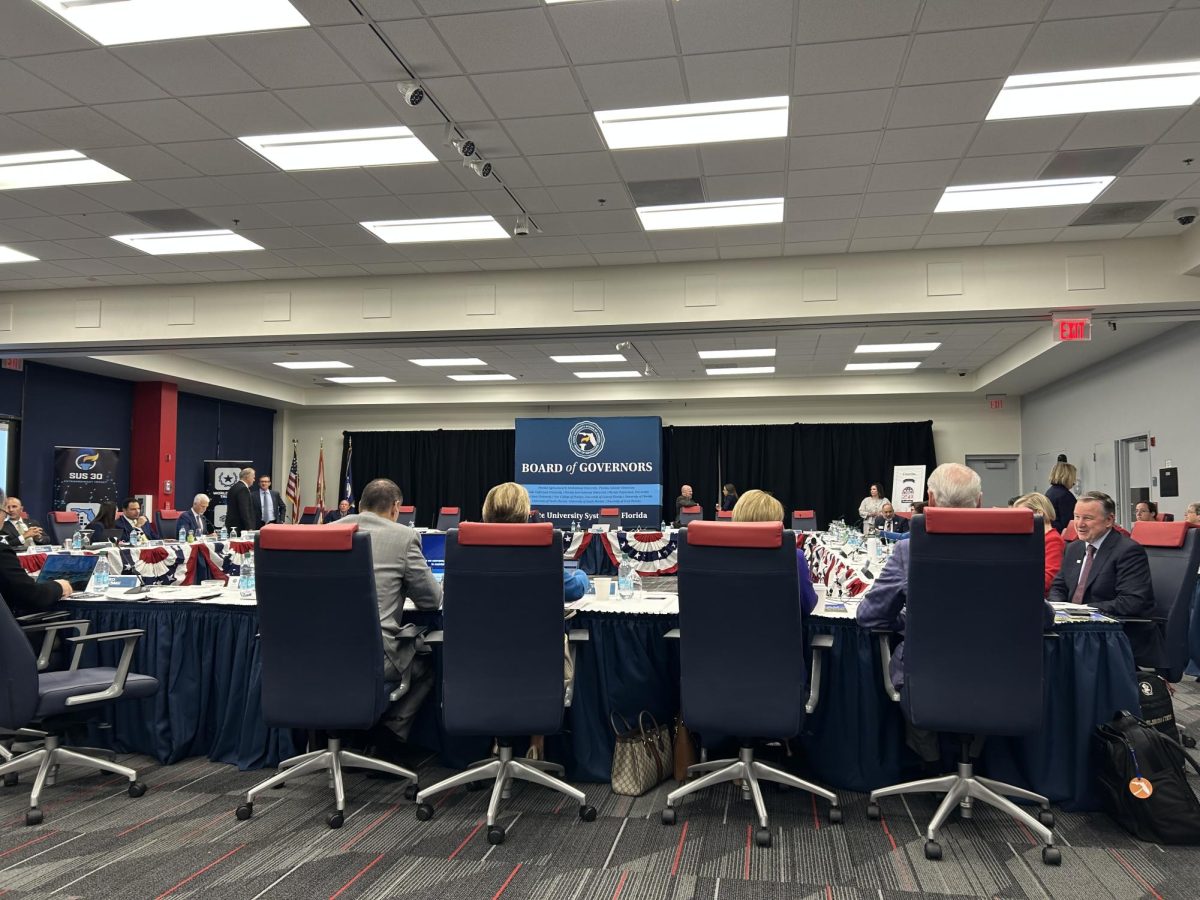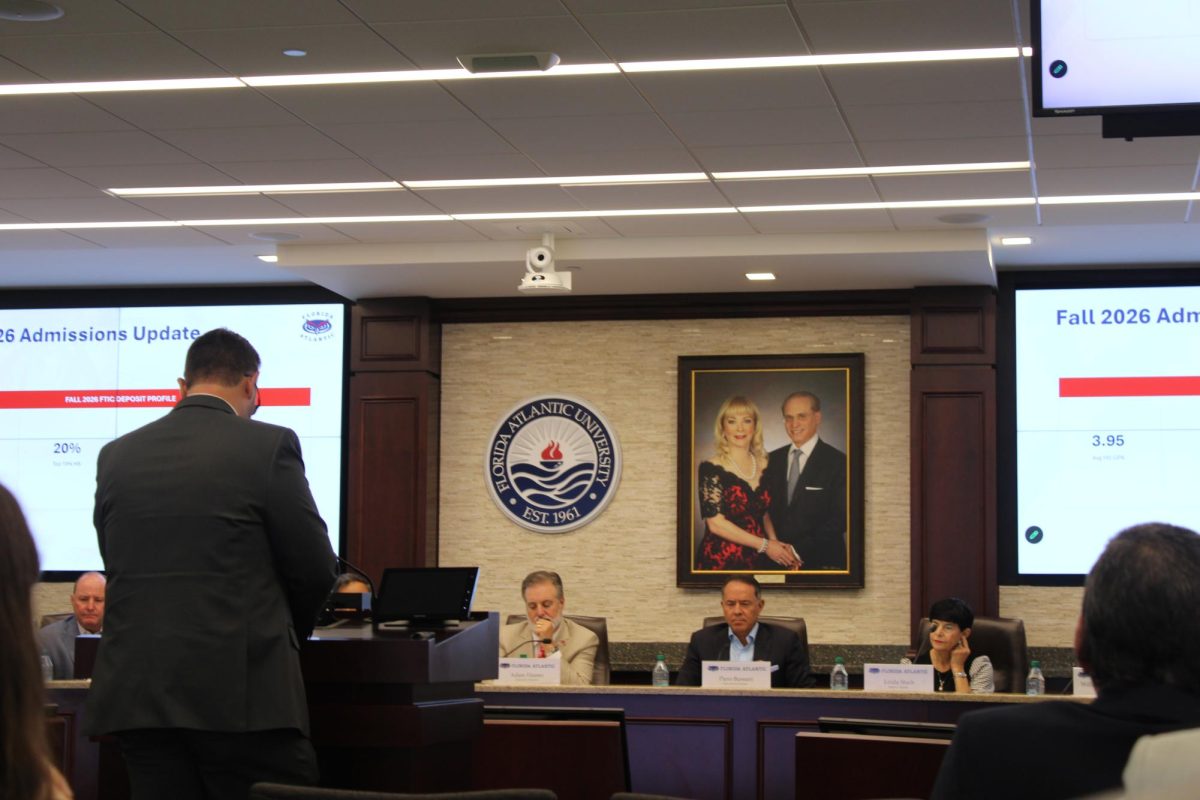
With just one more meeting left in the Spring semester, Florida Atlantic University’s Boca Raton House of Representatives returned to stalled legislation and emergency funding requests. Stepping in to represent students on issues ranging from long-delayed transparency reforms to supporting the Reserve Officers’ Training Corps (ROTC) commissioning ceremony after other university funding sources were exhausted.
The House approved emergency funding for the Spring ROTC Commissioning Ceremony after FAU Academic Affairs declined to support the event, stepping in to ensure the May 15 ceremony could proceed as FAU students and cadets are commissioned as Second Lieutenants. The House also revisited the long-delayed, 4th-time tabled Transparency and Records Integrity Bill, aimed at establishing clearer standards for publishing agendas and minutes and for maintaining records across leadership transitions.
MVSS Spring ROTC Commissioning Ceremony Funding Bill
Jason Nadolinski, Director of Military and Veterans Student Success at FAU, spoke at the House meeting explaining that the department is requesting funding for the annual ROTC commissioning ceremony scheduled for May 15. The event marks the completion of training for cadets who will be commissioned as Second Lieutenants transitioning into the U.S. Army.
He emphasized that the ceremony is a major milestone for students and will include high-profile attendees and speakers, including FAU President Adam Hasner, Secretary of the Army Patrick Murphy, U.S. Rep. Jared Moskowitz, and his constituent, Jennifer Roducci.
Nadolinski noted that the event was not funded in the current Activity and Service Fee (A&S), a credit students pay $12.32 per class that funds student events and groups like SG.
The attempts to secure funding from other university sources, including Academic Affairs, were denied in an email from Dean Dan Meeroff.
Meeroff said in the email to Nadolinski, “Given this limited amount, the funds are typically exhausted prior to the end of the fiscal year. As a result, we follow a process each May to allocate the $12,000 among requesting units for the upcoming year. At this point, all funds have been committed.”
Because of those rejections, MVSS is now seeking $3,935.45 from SG funding to support the ceremony.
He stressed that this is a one-time, non-recurring request, since the event is already promised to be properly budgeted in the following academic year, and emphasized the importance of SG approving the funds as the ceremony is a major milestone in military, because it celebrates FAU’s Army ROTC cadets completing four years of training and being commissioned as Second Lieutenants in the U.S. Army.
The House voted to pass the bill, emphasizing SG’s role in representing and allocating FAU student resources.
If approved, the bill will allocate remaining funds from one SG account (TAG 001320) and cover any additional costs from another account (TAG 001339), specifically to pay for event-related materials listed in the supporting exhibits.
Update on Transparency and Records Integrity Bill
The House revisited the Transparency and Records Integrity Bill, after being vetoed by FAU’s Boca Governor, Lance Moore, and SG President, Darsham Gonzalez. House Representative Christian Walden authored the Transparency and Records Integrity Bill, which passed the last House meeting 17-1, but was reentered after being vetoed by Moore and Gonzalez.
Walden said he developed the bill after discussions with Assistant Director of Student Media Advisor Wesley Wright regarding past and ongoing concerns that the House had not fully complied with Florida’s Sunshine Law, including during the Spring 2026 semester.
The Boca Raton House has previously struggled to consistently publish agendas and minutes on time. The University Press found that between fall 2024 and spring 2025, required records were not consistently uploaded, raising questions about compliance with both the FAU SG’s Constitution and Florida’s Sunshine Law, which required public access to such documents.
The new bill seeks to establish clearer requirements for maintaining and publishing House records. The legislation mandates that meeting agendas be posted at least 48 hours in advance and draft minutes be made available within 72 hours, with finalized minutes published after approval.
The bill also formalizes the House Secretary’s responsibilities for maintaining records and coordinating public communication, while introducing safeguards intended to preserve access to official student government accounts during leadership transitions.
In the Governor’s report, Moore states that they vetoed the bill because he doesn’t believe the House should have access to Instagram accounts that aren’t in their departments.
The House tabled the bill for the first time on Feb. 20 2026. Now it’s tabled a 4th time, meaning the bill will now go through Rules and Policies for review and, when approved, will be moved to the Committee. When the Committee approves them after reviewing and adjusting them, they will then be sent back to the House to be put on the agenda for voting at the last House meeting on April 24.
As the Spring semester comes to a close, the House continued its work representing FAU students, approving funding while advancing efforts to strengthen its operations on behalf of the student body.
Emily Ives is the Political Reporter for the University Press. Email her at [email protected] for more information on this and other stories.