During the first in-person senate meeting of the spring semester on Monday, the Florida Atlantic University Student senate passed SR 2026-01, a resolution on campus safety and transparency related to the Florida Atlantic University’s Police Department’s involvement in a 287(g) agreement with U.S. Immigration and Customs Enforcement (ICE).
The senate introduced the resolution to address concerns about campus policing transparency and immigration enforcement authority under the agreement, which authorizes FAU’s Police Department to act as ICE.
The resolution was authored by Nicholas Ostheimer, May Rojas, Esteban Lasso, Delaney Rosenblatt, and Caroline Ribeiro, with additional senate sponsors supporting the measure.
The resolution argues that FAU’s participation in the 287(g) agreement could impact campus and student trust, and calls for greater transparency from the campus police department.
Ostheimer, a Boca House Representative, notes that the House has reached out to Chief Sean Brammer for educational purposes regarding 287(g), but has yet to see him attend any Student Government meetings.
“If we can’t even hear from our own police chief, what the department’s thoughts are when entering into the 287 agreement, how can students trust them? And if the police chief cancels multiple times on promises to talk to the student body and addressed their concerns, how can we feel respected?”
Multiple students spoke out in support of the resolution during public forum to give the senate insight into their personal lives, which have been affected by the 287 (g) agreement
Julio, a junior at FAU, pulled out his green card and stated that it’s an important document that is not meant to walk around with. Julio adds that now he never leaves his dorm without it out of fear of seeming suspicious.
Ollie Silvers, a student on the Jupiter campus, states, “As a third-generation immigrant, the 287 agreement makes me feel unsafe and unwelcome at this university. One of the reasons I was most excited to enroll at FAU is mainly because of its emphasis on diversity.”
Ostheimer, president of the college Democrats, told the senate, “My parents are immigrants who renewed their green card three times and can be detained by nothing but suspicion.”
He adds, “ I’ve been told that resolutions like this are out of our jurisdiction. However, Article 1, section 2B, entrusts the student government with being the official voice of the opinions of the student body.”
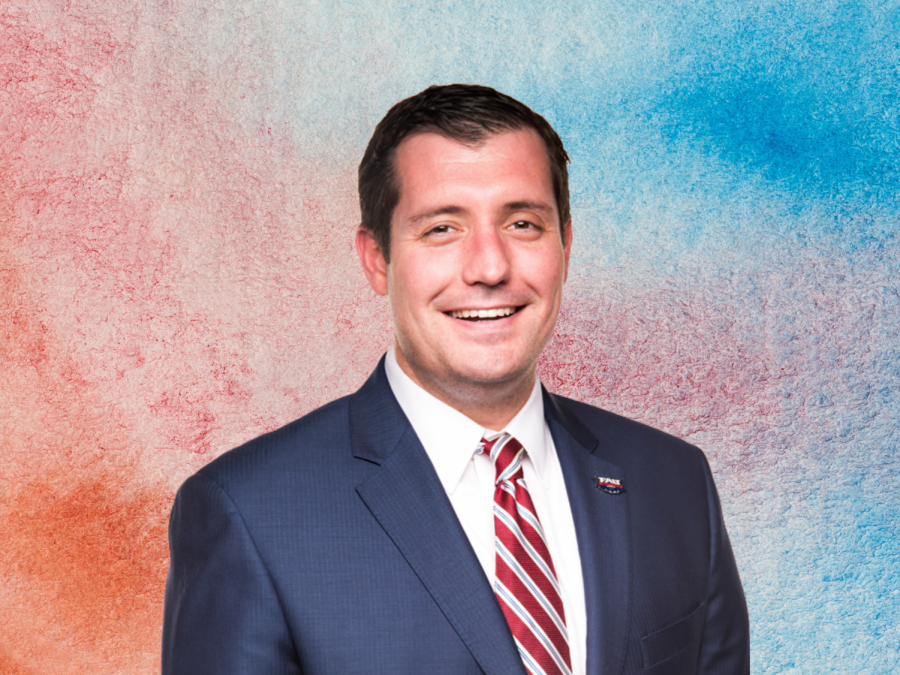
Caroline Ribeiro, a Jupiter student in the senate who is also worried about the 287 affecting her, asked Student Body President Darsham Gonzalez at the meeting, “Will you back us up to the board?” after the resolution passed the senate.
Gonzalez responded to Ribeiro, acknowledging the issue and emphasising the limits of his position.
Gonzalez explained to the University Press in a previous interview that he isn’t allowed to voice his opinion to the board, but that his job is to represent the student body and inform the Board of Trustees about student issues brought to him through student government.
“It’s to tell them and inform them that student life is succeeding in certain areas, and that there are other areas where students have concerns, and completely remove my personal opinion on those issues,” Gonzalez stated.
The Sunshine Party, which helped organize the resolution and an ICE Out protest being hosted on the Boca Raton campus on Wednesday, Feb. 25, sent out a press release shortly after the agreement’s approval.
“Students are scheduled to participate in a school walkout in protest of the 287(g) agreement. Until the Florida Atlantic University Board of Trustees and Police Department take sincere steps to address student concerns, the Sunshine Party is proud to support these and future actions,” they wrote.
Emily Ives is the Political Reporter for the University Press and is reporting on the Spring 2026 election. Email her at [email protected] for more information on this and other stories.