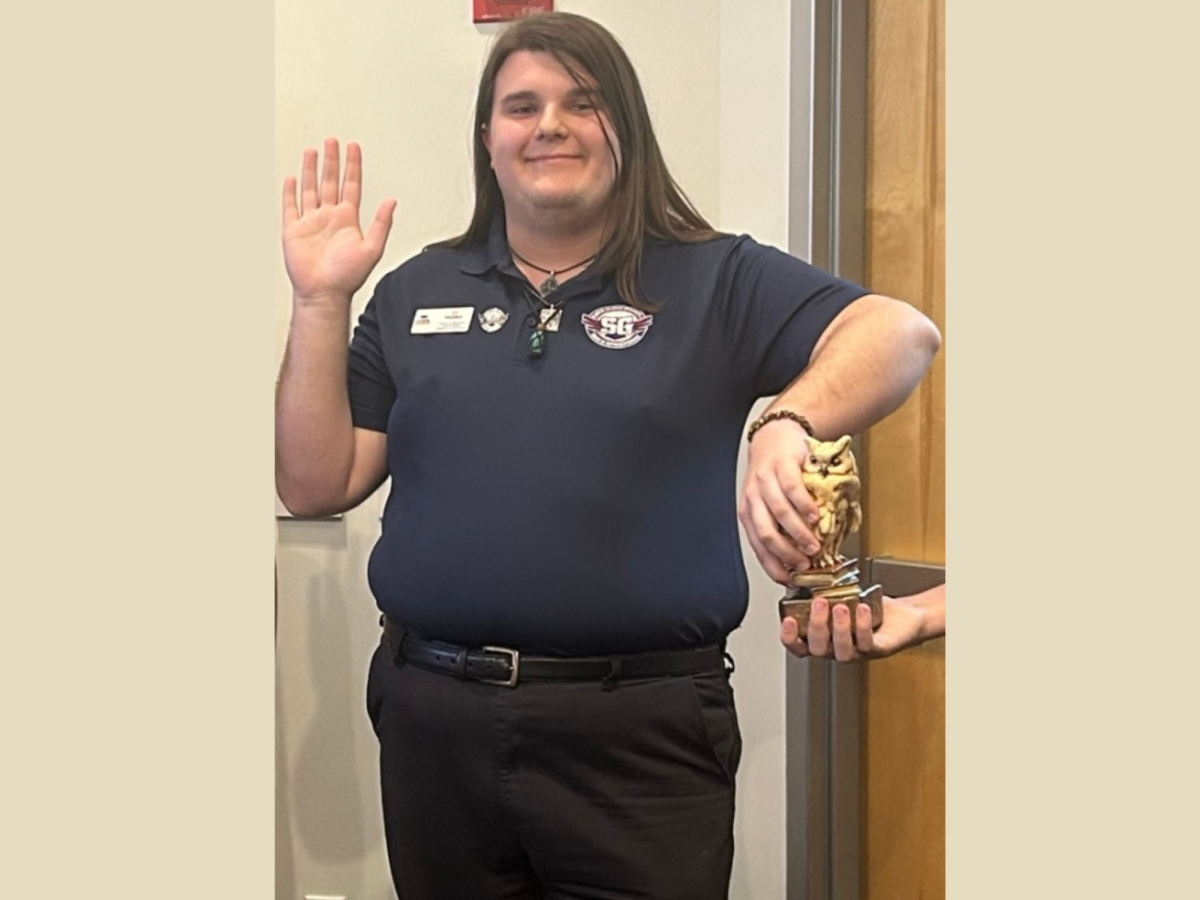
In a classroom within the College of Education at Florida Atlantic University’s Boca Raton campus, a lesson on First Amendment rights began like any other, until it became clear there was no Professor at the front of the room, only a student.
At FAU, student-led efforts to teach about First Amendment rights are emerging in response to rising campus activism and policy changes, like the university’s 287(g) agreement with federal immigration authorities. As debates over immigration enforcement and free speech intensify on campus, students are stepping in to fill what they see as a gap in understanding and protecting expression.
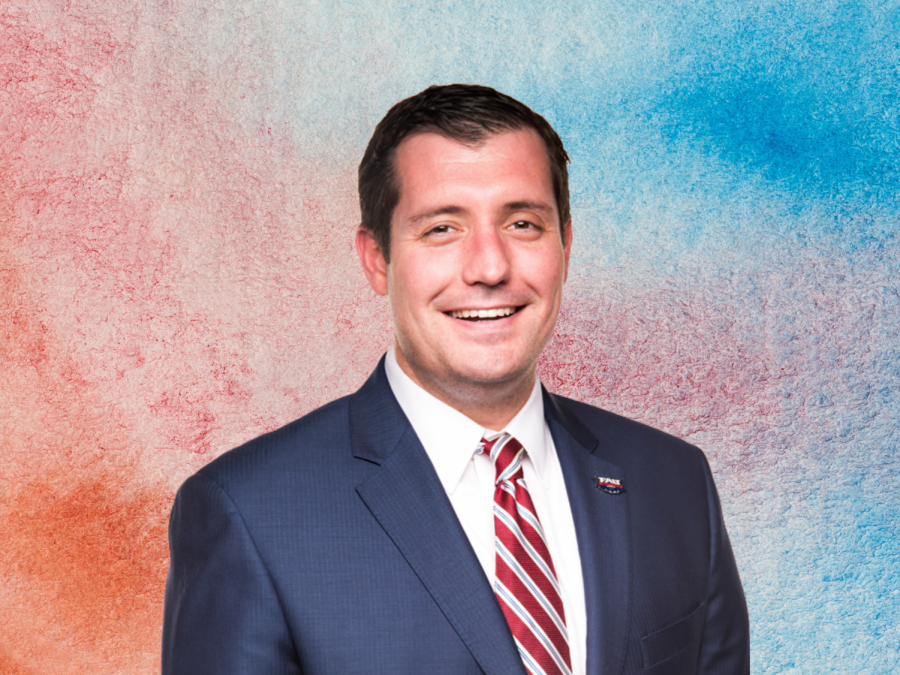
FAU student Nicholas Ostheimer, and the president of FAU’s College Democrats, stepped in after the need for students to better understand their First Amendment rights became clear, as activism grew following FAU’s decision to sign the 287(g) agreement in July 2025.
The agreement, which allows local law enforcement to cooperate with Immigration and Customs Enforcement, sparked protests, both in opposition and in support, including demonstrations organized by Turning Point USA (TPUSA) at FAU.
In response, College Democrats and Solidarity organized a Feb. 23 protest workshop following their Feb. 25 “ICE Out” Protest.
Standing at the front of the classroom, Ostheimer led a presentation developed with Dariel Gomez, the Statewide Organizer for American Civil Liberties Union (ACLU), which is a civil rights organization that works to protect and defend individual freedoms, including free speech rights, under the U.S. Constitution.
The workshop, “Students Rise Up”, with support by the Youth Campus Action, a student-led advocacy group that organizes young people around activism and political issues, often focusing on education and community organizing.
Aimed at breaking down First Amendment rights in practical terms, the session covered FAU’s protest policy, how to respond to law enforcement, what protections apply when speaking publicly on campus, and protest safety.
FAU’s spokesperson, Joshua Glanzer, wrote in an email that the university provides students with a “handout” called the Campus Free Speech Reminder, provided by the FAU Police Department, which explains where and how students can use free speech on campus. As well as the university’s policies on their website, outlining free speech and protest guidelines.
Glanzer emphasizes that it’s the University’s “utmost priority” to maintain safety during demonstrations.
Ostheimer said, “FAU’s First Amendment guidelines are valuable, but not everyone knows them. As someone with experience organizing a demonstration at FAU, it’s also a good opportunity for me to tell everyone what the free speech guidelines mean in practice.”
Ostheimer is also part of the Boca House of Representatives, where he and the House have requested that FAU’s Police Chief Sean Brammer speak at one of the meetings to answer students’ questions about what the 287(g) agreement entails and details on protest policies, but they have yet to see him attend.
“If we can’t even hear from our own police chief, what the department’s thoughts were when entering into the 287 agreement, how can students trust them? And if the police chief cancels multiple times on promises to talk to the student body and address their concerns, how can we feel respected?” Ostheimer stated.
Amanda Nordstrom, the strategic campaigns counsel for the Foundation for Individual Rights and Expression (FIRE) campus rights advocacy department, said student-led efforts like these can be a positive sign, but should not replace institutional guidance.
“That kind of preparation can be a positive sign that students want to exercise their rights responsibly,” said Nordstrom. “But students shouldn’t have to rely entirely on informal channels to understand their expressive rights. Universities should make clear and accessible information about free speech and protest policies readily available to their campus communities.”
Gomez acknowledges the importance of FAU protecting students’ First Amendment rights by allowing them to protest freely.
“FAU students have demonstrated leadership in taking on the responsibility of teaching and safeguarding the constitutional rights of their fellow students,” Gomez said. “At a time in our country’s history where the First Amendment is coming under fire from many directions, it’s crucial that more young people take a stand and follow FAU’s lead in protecting students’ rights to peacefully protest.”
Concerns about how free speech is understood and applied on college campuses are not unique to FAU.
In Iowa, lawmakers reviewed multiple incidents in which students and student groups said their rights were limited by professors, peers, or university policies.
In one case, a professor at a public university in Iowa was accused of threatening to dismiss students over their political views. Other disputes, including challenges to campus speech restrictions, raised broader questions about how institutions interpret First Amendment protections.
Those concerns led to a statewide response. Under policies set by the Iowa Board of Regents, the University of Iowa stated in an email that “Code Chapter 261H, the Iowa Board of Regents requires all faculty, staff, and students at the state’s public universities to complete annual free speech training.”
Ostheimer notes that FAU should require First Amendment training because it can lead to more confident, better-informed students.
“FAU absolutely should do the same. I know students and faculty at dozens of other public universities across the country. They are much less afraid to speak their minds because they understand their rights,” said Ostheimer. “FAU has nurtured a culture of fear. Regardless of the First Amendment, many students don’t really feel free to speak.”
Emily Ives is the Political Reporter for the University Press. For more information on this and other stories, email her at [email protected].