The College Democrats at Florida Atlantic University and Solidarity at FAU hosted a protest training workshop called “Students Rise Up,” funded by Youth Campus Action, a student-led initiative to bring educational change within schools, on Monday night in the College of Education on FAU’s Boca Raton campus.
The workshop educated students by covering First Amendment rights, protester safety, campus policies, medical response, and how to interact with police, the press, and agitators.
The event took place a few hours before the first in-person student government Senate meeting of the 2026 spring semester, during which a resolution challenging FAU’s 287(g) agreement was passed.
The workshop was held ahead of the “ICE Out” walkout on Wednesday, Feb. 25, at 1 p.m. outside of the Kenneth R. Williams Administration Building.
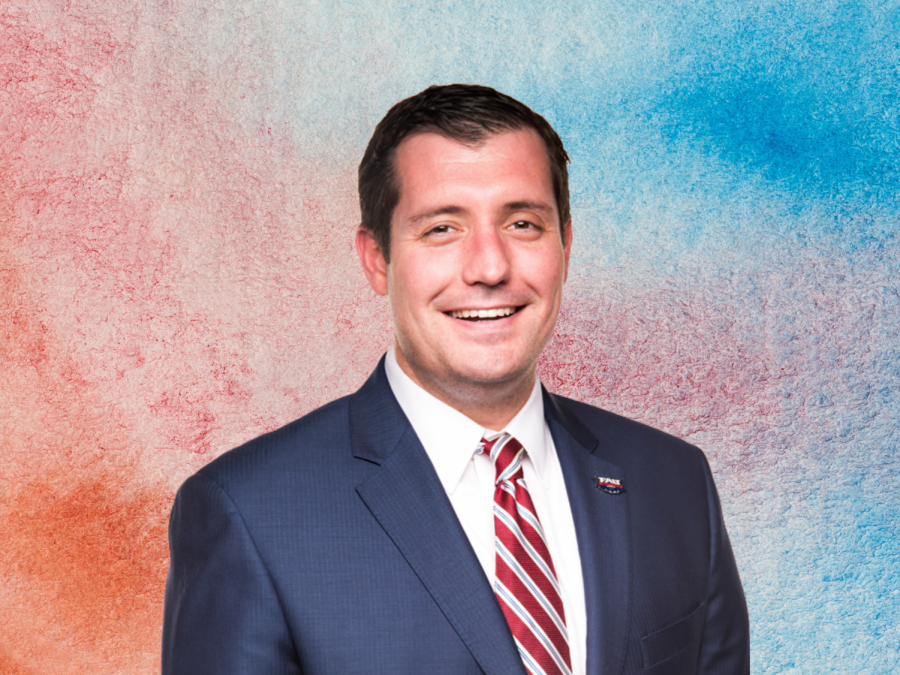
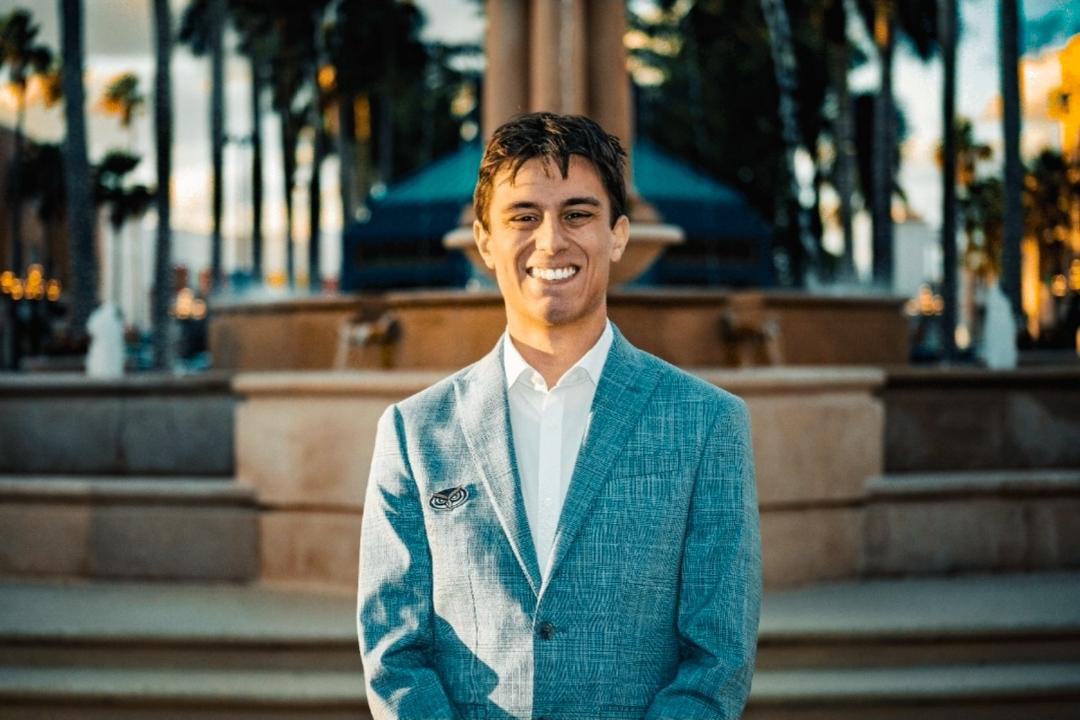
Nicholas Ostheimer, president of the FAU College Democrats and a Boca Raton House representative, said the goal of the workshop was to “make protesting accessible,” explaining that educating students on their rights helps them safely exercise free speech while keeping the focus on the issue being demonstrated.
At the training, Ostheimer distributed two cards to attendees: a personal information card and a “red card.” The red cards outline constitutional protections such as the right to remain silent and the right to request an attorney if approached by officers from the U.S. Immigration and Customs Enforcement (ICE).
Ostheimer said one of the main goals of the training was to ensure that students exchange emergency contact information before attending demonstrations, emphasizing preparation and safety. He added that understanding constitutional rights is important in situations where individuals may be detained.
The session began with a slideshow explaining First Amendment protections for students at Florida Atlantic University, emphasizing that students have the right to freedom of speech and peaceful assembly, including the right to protest policies or actions they disagree with, provided demonstrations comply with the university’s regulations.
Ostheimer also said organizers notified campus officials ahead of the demonstration, including FAU Police Chief Sean Brammer and the university’s public affairs office, and received approval to proceed.
He reviewed campus policies with attendees, noting that masks that fully conceal identity are generally prohibited, though surgical masks are allowed. Protest participants are providing surgical masks for students who don’t feel safe showing their identity.
Ostheimer said some students expressed concerns about facial recognition and that mask rules could affect participation.
The presentation then shifted to guidance on interacting with law enforcement and the media. Ostheimer encouraged volunteers to speak with reporters to help spread awareness, but noted that students are not required to give interviews.
He also advised protesters to comply with lawful police instructions. Ostheimer notes from last year’s protest, the visible law enforcement presence felt intimidating and “scared off some protesters.” He said that experience is why he encourages students to bring identification and keep their red cards accessible, emphasizing that understanding their rights and being prepared can help students feel safer during demonstrations.
“Don’t give them what they want,” Ostheimer said, referring to agitators, encouraging protesters to stay focused on their message.
Members of Solidarity, a campus student activism organization founded in 2020, help organize protests and community-focused events. Concluded the training with a presentation on responding to medical emergencies at demonstrations.
The session covered recognizing heat-related illness, panic attacks, and severe bleeding, when to call 911, and basic steps participants can take to assist others until professional help arrives.
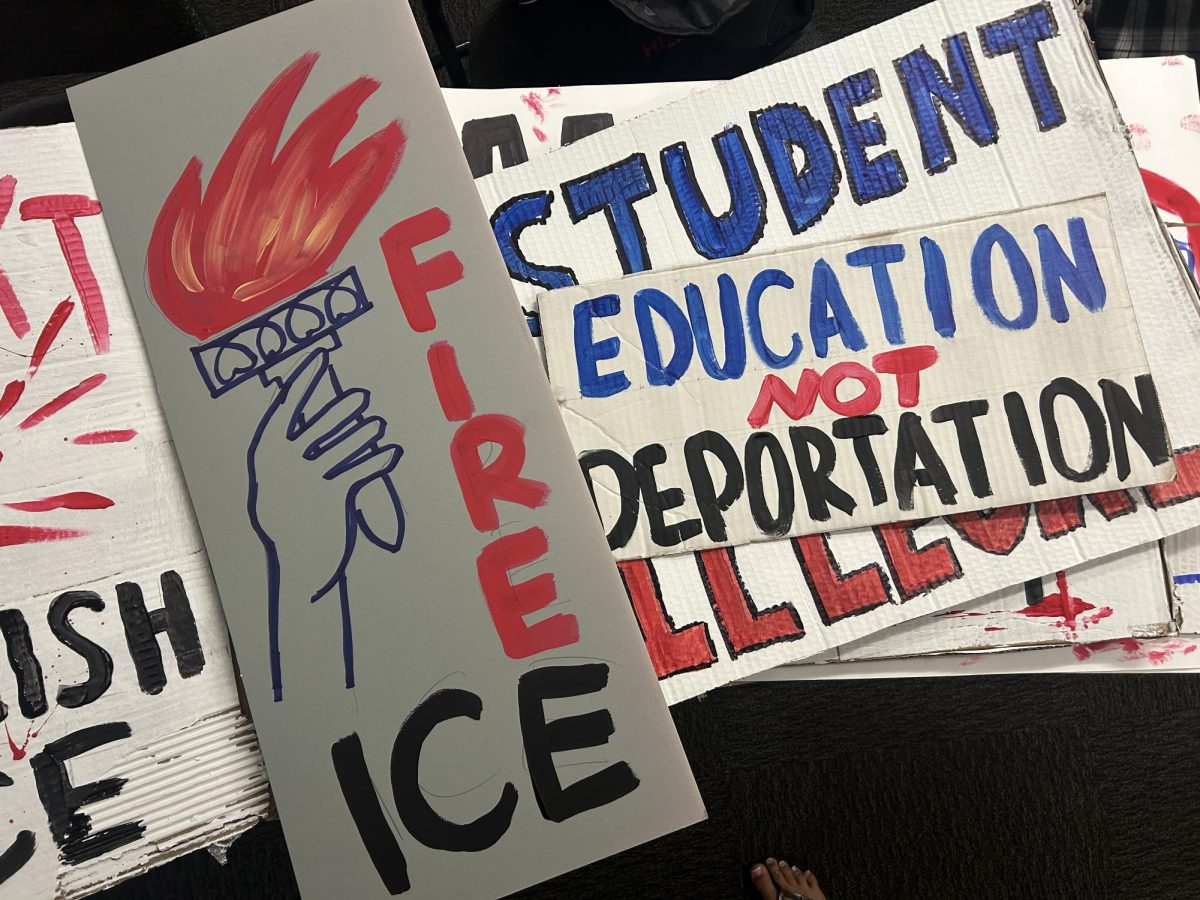
The rest of the training focused on poster board-making, with guidance and supplies from Ostheimer’s mom, an artist. She encourages students to use color theory, explaining that traffic sign colors should be used on words that want to stand out, and light colors like blue for filler letters.
Ostheimer’s goal extended beyond a single protest, encouraging students to educate themselves on their First Amendment rights and constitutional protections as part of ongoing civic participation.
Osthemer stated, “We won’t stop protesting until we terminate the 287 (g) agreement.”
Emily Ives is the Political Reporter for the University Press. Email her at [email protected] for more information on this and other stories.