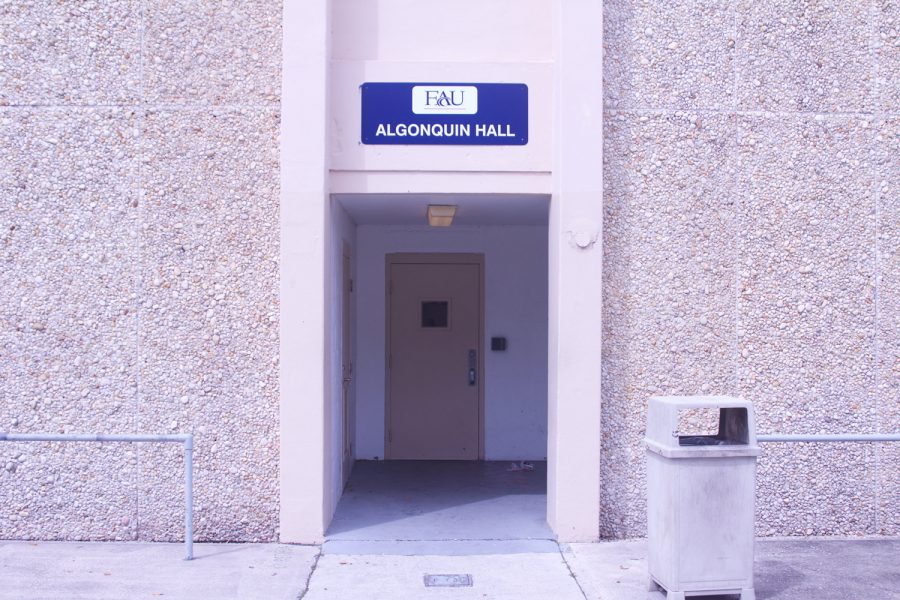
There’s no Animal House, Van Wilder or Old School fraternity at FAU. In fact, there has never been any Greek housing on campus, nor have there been documented plans to build any. Yet, FAU officials have said housing plans are “in the works” since FAU’s first Greek chapter in 1969.
Greek life on campus remains homeless due to issues of money, administration and turnover in Greek Affairs. But, newly elected Greek Life Coordinator Ryan O’Rourke says he’s going to be the one to facilitate change.
“I want to see Greek life at FAU grow – I’m an advocate for [Greek life] having a space on campus,” O’Rourke says. “I’m here to be a resource and a support system, not a dictator of Greek life.”
In order to initiate change in Greek housing, the administration and the Greek Affairs office are working together to create a five-year plan for Greek life. Before the plan is finalized, O’Rourke says the administration needs to set up a team to assess Greek life on campus.
“I want to take the time to get a good perspective on what the people in the Greek and FAU Communities want to see Greek life turn into,” O’Rourke says. “And then see what they expect from it.”
The university wide assessment and the strategic team will only be a small part of the five-year Greek plan that includes expanding Greek life and possibly building housing on campus. Short-term goals for the Greek Affairs office include coordinating a comprehensive President Leadership Development Program, which will happen early in the spring semester, and an all-out hazing educational workshop in April.
After the assessment, a report will then be compiled from the information and transitioned into a spring 2008, two-day strategic planning session. From there, a team will be produced and given a plan to harvest improved Greek life on campus.
Rick Smith, the Inter-Fraternity Council president at FAU, says more than just an assessment is needed to make Greek on campus housing possible.
“It’s been like a catch-22 for many years,” Smith says. “We ask for money to fund housing and the university says we need more members spread throughout the chapters.”
Yet, Smith says in order to get more members, FAU needs to offer housing.
FAU’s National Pan-Hellenic Council President Amanda Clare agrees with Smith, and says “considerably smaller numbers hold us back from getting anywhere.”
O’Rourke says once the five-year plan to put into action, construction money to build houses on campus would most likely come from Alumni Endowment funds, none of which exist at this time.
While plans are still in the works for coordinating the Greek life assessment, FAU officials say on-campus Greek housing would boost overall student activity and sports interest.
“I think a Greek structure would grab a lot of new students for enrollment,” O’Rourke says. “Traditional school spirit would arise if there were more students living on campus.”
Plans are yet to be finalized for when on-campus housing will be erected, but Smith and Clare are confident that the current leadership in Greek Affairs will actually make it happened this time.
“I think you should expect big things from Greek Life,” O’Rourke says. “Not to be clichí©, but Rome wasn’t built in a day.”
Going Greek Statewide
What other Florida universities are doing about Greek housing
Since FAU’s doors opened in 1962, the administration has considered plans for building on campus Greek housing. But due to issues of money, administration and turnover in Greek Affairs, plans to house FAU’s 20 Greek chapters are still in the works today.
Other public universities in Florida have handled situation very differently including FAU’s most comparable, the Universities of Florida, Central Florida and South Florida. The University of Florida in Gainesville, a state renowned party school, was rated number 16 on Playboy Magazine’s Top Party Schools 2002. Out of UF’s 34,431 undergraduate students, 15 percent of the Gators are Greek. UF’s Greek Life Coordinator Chris Bullins says the university has always had “a lot of emphasis placed on Greek life” and it will remain “a pivotal point in university student life.”
UF opened its doors in 1853 and the first on campus Greek House opened in 1884, only 31 years later. Thirty-six total Greek Houses and 61 chapters populate the campus which is subleased to the individual chapters. The university owns the land, but not the actual houses.
The University of Central Florida in Orlando started as “The Florida Technological University” in 1968 and Greek housing started in 1985, only 17 years after the schools opening. Eight percent of UCF’s 39,679 undergraduates are Greek with 12 houses and 41 chapters.
UCF’s Greek Life coordinator Greg Mason the university subleases the houses to individual chapters but the state owns the land. He admits that this creates some problems, “because the houses are kept up by the individual chapters, they sometimes get messy and unkempt, especially some of the fraternities.”
The new plan for UCF is to open Greek Park Part Two with 12 new houses that will be owned by the university and will be dealt with like residence halls, RA’s and all.
Tampa’s University of South Florida began enrollment in 1966 and opened their first Greek house in 2003. Five percent of the 32,442 undergraduate students are Greek and there are 15 houses on campus.
Much like UF and UCF, USF’s Greek Life Coordinator Megan Vadnais says USF’s Greek housing is also subleased to individual chapters.