We all know FAU isn’t exactly what you’d call a traditional school. So, it’s not a surprise that FAU officials say our graffiti isn’t so traditional either.
Whether it’s a sticker on a pole, a carving on a tree or something etched into the pavement below your feet, there’s graffiti all around you. But it’s much more artistic than some guy’s name on the side of a building. In fact, some of it’s actually historic too.
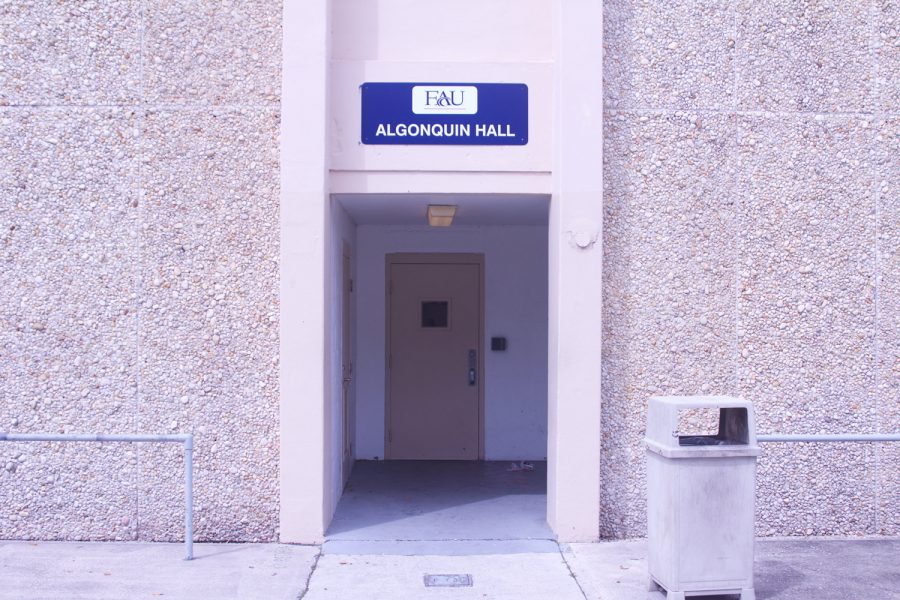
Nancy Brecht, University Police records clerk, says there’s some graffiti tagging on the north side of the Algonquin Residence Hall on the Boca campus that dates back to 1970 and is considered “historic” by the University Police.
According to the police department, graffiti is any type of tagging on a building – such as someone’s name or even a happy face – and it’s considered an act of vandalism. If seen by the police department or FAU maintenance, it’s either washed off or painted over.
Yet, Brecht isn’t sure why some graffiti gets to stay – and is considered “historic” – while the rest is quickly covered up.
FAU’s custodial staff, Bets Maintenance and Janitorial Services, isn’t sure either. In fact, I couldn’t find anyone in the police department or FAU’s Physical Plant who could give a definitive answer as to why some graffiti is left and considered “historic,” while today’s graffiti is being washed away or painted over.
Bets Project Manger Richard Mtichell, who directly oversees the cleanup of graffiti on campus, says he considers graffiti to be “anything written where it’s not supposed to be.”
But who decides where graffiti is “supposed” to be? Much like art, I guess it’s all up for interpretation.
Last semester, artwork on the path only three feet away from the “historic graffiti” site was covered. But this artwork wasn’t just some doodles on the ground. In fact, the “graffiti” was by students in FAU organizations promoting Greek life and clubs on campus.
When students complained, the maintenance crew said the paved path became a “slipping hazard” once it was painted. So what did they do? Covered it up with a fresh coat of white paint.
Student Body Vice President Abe Cohen feels FAU’s perception of graffiti is a bit skewed.
“Students tagging campus promoting a club or getting involved in campus life shouldn’t be considered graffiti,” Cohen says. “We need more traditional art on campus that can be considered historic years from now.”
Student Body President Tony Teixeira agrees. “We should have some kind of area on campus that students can tag for the school and show some spirit. We need more FAU colors on our walls.”