It wasn’t a week after she was born that Ann Marie Bedard’s funeral arrangements began.
Born 17 weeks premature, doctors hadn’t considered the possibility that she would ever be able to walk or talk. They also assumed she would suffer from severe mental retardation and that a normal life was out of the question.
æDiagnosed with retinopathy of prematurity (ROP) at two months, doctors predicted Bedard only had a five percent chance of survival. But after spending four months in incubation, it was clear to those around Bedard that her will to survive was stronger than her illness.
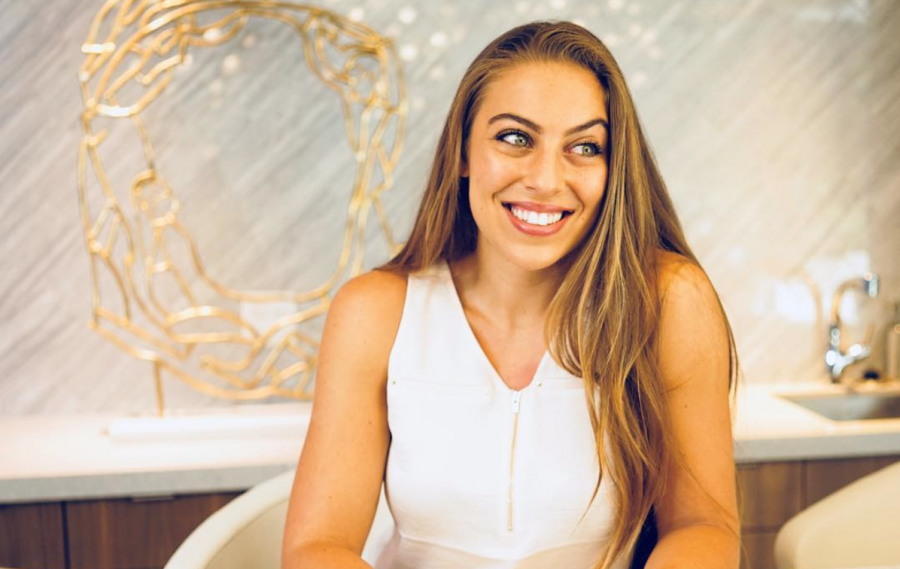
These days, Bedard struts around the Florida Atlantic University campus with a smile from ear to ear and a passionate love for life.
“I consider myself a miracle child,” she says.
æROP is a visibility disorder among premature infants that causes different degrees of visual impairment including complete blindness. It occurs when an infant is born before the retinas have completely developed, causing them to detach from the tissue connecting to the back of the eyes.
æStill, despite complete blindness in her left eye and severe visual impairment in her right, Bedard conducts her day as any other student living on campus.
She finishes typing her three-page sociology paper that’s due the next day and then begins reading her American history book to study for the next day’s test.
“I can’t wait for some home-cooked meals and a break from school. I feel like I have been going non-stop for the last two weeks straight,” she says with a sigh.
æBedard lives independently at the Heritage Park Towers Residence Hall (HPT) at FAU. It’s a drastic step for any incoming freshman, but Bedard is having the time of her life. “I love school and learning and the college atmosphere is great,” she declares.
The Office for Students with Disabilities (OSD) does a lot to help students like Bedard achieve success in college and beyond.
“We are here to empower the students and enable them to be independent,” says OSD Director Nicole Rokos.
The office maintains a media lab for students with special needs. The computers are equipped with innovative software such as Kurzweil, a text-to-speech program that has been in use at FAU for students with disabilities for the past 10 years, according to Rokos.
æOther programs include Jaws screen-reader, which “reads” Web sites that students access. There is also Dragon speech recognition, an automated typing program that turns spoken words into text.
æWith 600 currently registered students, up-to-date technology is important to students like Bedard.
Bedard also meets with an OSD counselor several times a week to help stay organized and prepared for classes.
OSD isn’t the only support that Bedard receives on a daily basis. After she was born, her mother returned to college to attain a master’s degree in special education. It was a decision she made after learning about her daughter’s condition. “She was my mentor,” says Bedard, who also surrounds herself with a close group of friends and a boyfriend whom she has been dating for the past six months.
The kindness and support that Bedard has encountered throughout her life only inspires her to help others.
Overcoming her disability only strengthens Bedard’s lust for life. “I believe God put me on earth to show him what I can do,” explains Bedard. “I don’t think of it as having a sort of adversity.”
With ambitions of becoming a motivational counselor, Bedard is far from where doctors thought she would be 18 years ago. She even gives presentations on campus to other students about her unique situation.
Other than her visual impediment, Bedard is similar to many other young adults on the FAU campus. She likes heading to the beach, talking on the phone with friends, watching TV and hanging out.
“I don’t think of myself as disabled,” she continues. “I guess I don’t have any limitations on myself or what I can do. I believe if you try, you can do anything.”