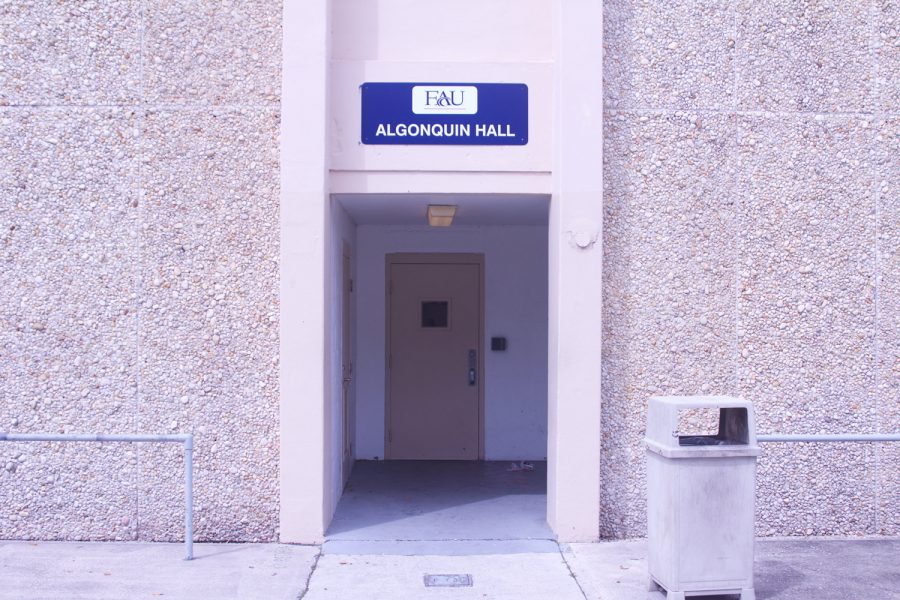
There is a special irony in the aggressive construction taking place on campus. As old and dilapidated buildings are being torn down, so too is the ‘old way of doing things’ at Florida Atlantic University. Anthony Catanese may be known as the president who built the most new buildings at FAU, but it appears that he will also be known as the one who allowed their foundations to rot with scandal, inefficiency and apathy under all that shiny glass and steel.
Enter Frank T. Brogan. Fresh from his reelection as Florida’s lieutenant governor in 2002, he surprised most Floridians with his decision to leave Tallahassee for the greener pastures of Boca Raton. After taking office on March 3, Brogan immediately formed an 18-member transition team to make recommendations on the goals and organization of FAU. After little more than a month, the transition team completed its report and right now, as you read this article, changes are taking place to make FAU a premier institution of higher learning in the State of Florida.
Brogan cleans house
One of President Brogan’s top initiatives is to streamline the Division of Student Affairs and the entire university governance structure. President Brogan has dubbed the university’s organizational chart as “the chart where no one reports to anyone and everyone reports to everyone.”
A reoccurring theme in the transition report is to redo the organizational structure. Brogan wants it to be efficient, streamlined, and with far less “report-to’s.” He mentioned that, currently, there could be over 20 entities reporting to any one office.
The university has one major goal, and that is to educate. There is, of course, a business side to the pursuit of learning. President Brogan wants a clear division between the academic side and the business end of FAU. “The provost needs to be on a direct line to the president and all things academic,” Brogan explained, adding, “that includes all colleges and research activities on all campuses.”
Another change Brogan wants to make in the academic structure is having the Office of Admissions report to the provost rather than the senior vice president of Student Affairs. Brogan says the move will give the admissions office more “visibility.” “Most other universities have the admissions office reporting to their provosts,” Brogan says.
Virtually almost anything that goes on within the university is a student affair. Brogan believes that the Division of Student Affairs should concentrate only on providing the services that a student needs while attending FAU, such as financial aid, the police, career development, and housing. “We’re looking at getting Student Affairs back to the major student affairs issues that are so essential to the university,” Brogan says.
The president is considering moving the business-related entities, such as the University Center, the bookstore, and the cafeterias, out of Student Affairs and brought under the vice president for budgeting and planning. Another Student Affairs entity, Campus Recreation, will be moved under athletics. The senior vice president for Student Affairs, Emanuel Newsome, told the University Press that no matter what changes are implemented, “Student Affairs will continue to provide expert services to the students.”
Raising faculty morale (and salaries)
“This is going to be a tough budget year.” The words are an understatement by President Brogan, but unlike the rest of Florida’s state universities, our new president and Board of Trustees have made a solid commitment to raise faculty morale.
Although it is not the only cause for faculty unrest, raising their already paltry salaries remains the highest priority. “We are currently at the 18th percentile among other universities when it comes to salaries,” explains Fred Hoffman, mathematics professor and president of the Faculty Senate. Hoffman, who also serves as an ex officio member of the Board of Trustees, exalted at Brogan’s backing of the Trustees’ plan to raise faculty salaries to at least the 40th percentile. “While some universities may not be in a position to give any faculty raises at all this year,” says Brogan, “I’ve already talked to my Board and we are still committed to try to do the best for our faculty that we can.”
The cost of bringing faculty salaries to the 40th percentile: four million dollars, over the next two years, above any and all normal faculty raises. This will be a more arduous task than it already sounds. Before Brogan and other university presidents sent a blitzkrieg of lobbyists to Tallahassee, the Legislature was prepared to cut $118 million from the state universities system. As of May 28, that figure was down to $40 million in cuts.
It appears, however, that FAU is going to come out of the budget battle virtually unscathed. According to President Brogan, the university’s budget will be a “wash”. Essentially, FAU will not have its budget cut, but the budget will not reflect any enrollment growth. This will ultimately lead to a more stringent admissions policy for 2004.
According to Fred Hoffman, a more stringent admissions policy is exactly what the faculty wants. “FAU has always had good students; however with growth we have also brought in not-so-good students.” Hoffman went on to say that if FAU increases admissions standards and provides more scholarships, it would attract better students and thus attract “world-class” faculty.
Salaries and admissions are the not the only chips on the faculty’s collective shoulder. “The registration system [OASIS] is a disaster,” says Hoffman. “Difficulties for students become difficulties for faculty; the faculty are the ones who know when students are having difficulties and this makes us unhappy.”
Football is here to stay
After a dismal season, poor attendance and a criminal investigation into the program’s benefactor, the FAU Foundation, rumors were abound that the Fighting Owls would end up being tossed on a gridiron barbeque. According to Brogan, football is here to stay.
President Brogan’s goal is to scale down the athletic department’s budget in an effort to make it live within its means.
The root of football’s problems lay within the athletic department’s budgeting and planning. “The athletic department is overextended. We run a Division II athletic department with a Division IA budget,” Brogan explains. He insists that athletics must create a new budget that people can work within and must adhere to.
To that end, President Brogan has made it clear the FAU Foundation will not be subsidizing the day-to-day operations of the athletic department as they have in the past. Brogan went on to say, “The Foundation should not be in a position of subsidizing as much as they should be enhancing [the football program].”
Brogan recently announced that he has made over $800,000 in cuts to the athletic budget. He is confident that the cuts will not negatively impact athletics. “The cuts are largely in part-time positions and some of the operational expenses that go along with our athletic department,” Brogan says. “These are the tough decisions you have to make in order to live within your means.”
FAU students can, however, expect a football stadium on the Boca Raton campus within the next several years. This is where the FAU Foundation will ultimately enhance the athletic program. FAU has finalized a deal that will allow the Fighting Owls to play at Ft. Lauderdale’s Lockhart Stadium for the next three years, resulting in a $500,000 savings per year versus playing at Pro Player Stadium.
“The Lockhart deal has given us a three-year grace period to begin again, building a vision and then funding a vision to build a football facility,” Brogan says, noting that the administration will start planning for a stadium now rather than wait until the Lockhart contract expires. In fact, in order to be considered for Division IA play, the team must compete in a facility that seats 30,000 people and must have a average attendance of 15,000 per game. According to Brogan, the transition of our football program to Division IA status will be slow, but has assured the university that it will be done right.
Brogan completes first semester
“You always wonder when you make a life-changing decision, whether it’s going to pan out to be the positive thing you thought it was going to be,” Brogan says, “but I knew how much I would love it if I were afforded the opportunity to be president of Florida Atlantic University.” And after three months he still loves his job and has become a local celebrity in Boca Raton. “I have been so pleasantly rewarded with a welcome that I never expected – not only from the faculty and student body, but it takes me a hour to buy a loaf of bread at Publix.”
The first 100 days of President Brogan
January 31 — Brogan selected as FAU’s fifth president.
February 13 — Florida Atlantic University is one of three state universities in Florida recommended to receive a $10 million award to develop a world-class research center called The Center of Excellence in Biomedical and Marine Biotechnology.
February 21 — Interim President Richard Osburn was informed that he couldn’t return as provost under Frank Brogan.
February 22 — FAU Foundation scandal breaks, University Advancement offices are shut down and locked to prevent evidence tampering. Former President Anthony Catanese and Vice President of University Advancement Carla Coleman accused of laundering $42,000 to buy Catanese a new red corvette
March 3 — Brogan resigns as Florida’s lieutenant. governor and assumes the presidency of FAU. Immediately forms 18-member transition team.
March 4 — Frank Brogan and FAU’s Student Government are recognized by state legislators at the Palm Beach County Day reception in Tallahassee.
April 26 — Police agencies turn FAU Foundation case over to the State Attorney’s Office for prosecution.
April 30 — President Brogan hosts successful reception for faculty, commits to raising faculty morale.
May 1 — Women’s water polo is eliminated from athletic budget.
May 2 — Brogan attends first commencement ceremony as president.