Journal excerpt of December 17, 2001:
I awoke to the familiar morning call of the rooster; the sensation of the temporary cool breeze entering the half-opened door; the ferocious barking of dogs in the distance; the mignon chirping of the nearby birds. I noticed the immaculate sky, and the smooth sunrays peering through my window. I also noticed tracks of mosquito bites on my arms. It is 7:30 a.m. on a Sunday morning in Port-au-Prince, Haí¿ti.
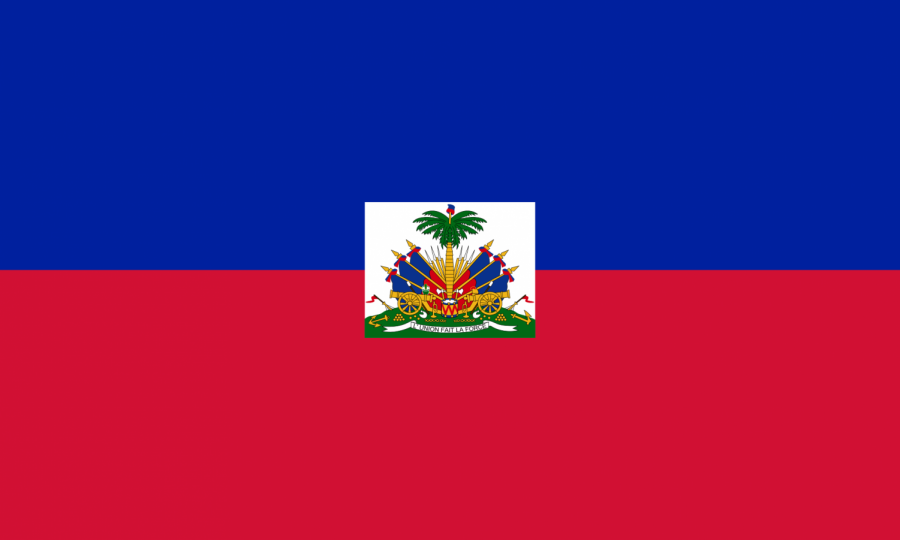
I was born in the United States, but shortly left for Haiti to be raised by my grandparents. I returned to the U.S. at the age of nine, and had not gone back since. During my years in the States, I had been conditioned with a negative perception of Haiti. However, I did not want to believe that Haiti, the second country to have won its independence in the Americas (after the U.S. won its independence from the British) and also a prosperous French colony at the time, was in a devastated state. I also did not want to believe that Haiti, where I had received an honest childhood, was a political dirt rag waiting to be washed. And so, at the age of twenty-one, instead of visiting my native state of New York during winter break, I had decided to follow through with my resolution to reacquaint myself with Haiti. I wanted to affirm my belief that despite its impoverished state, Haiti continually held a natural beauty in my eyes.
Arriving in Haiti and observing the streets during the drive to my aunt’s auxiliary house, I was not shocked by Haiti’s depleted condition. Then again, I was so ecstatic to be back, that even when the electricity went out for the night, you could still see a smile on my face. Speaking of electricity, I quickly adapted to the absence of running water at my aunt’s house: I became a connoisseur of the toilet as I poured water into its tank enabling it to flush; I bathed with a five gallon container of water in place of my multi-function shower head; my running sink water was replaced by a 28-ounce water container as I brushed my teeth. You could say I became a conservationist.
On the other hand, when I was taken to my cousin’s luxuriously contemporary house situated in the mountains of Boutillier, there was no need to worry about a shortage of electricity. Driving up to the house, I marveled at the grandeur appearance of its exterior architecture. Entering the house’s complimentary unique interior design, I felt as though I never left the States as I caught up on the day’s world news on CNN via DIRECTV. Aside from seeking out some much-needed rest, I also sought to observe what I could of Haiti throughout the remainder of my trip.
I must say that driving in Florida by no means compares to the traffic of Haiti. Imagine driving on unpaved roads with not one traffic light in sight, as you aggressively fight your way into a small gap between two cars to turn into a street corner. The phrase “watch for pedestrians” no longer applies as you forcefully drive amidst crowds who may not realize that you want to get home in fifteen minutes, not two hours! In Haiti, every hour is rush hour.
Growing up in Haiti, I recalled the country’s heterogeneous peoples, who varied from skin color to hair texture; the maids, an addition to the common household who also served as confidantes; the usual coming-and-going of friends, relatives, or visitors throughout the day. However, I did not recall the sight of numerous merchants situated practically everywhere in the streets, children pressing themselves onto cars begging for money, and armed guards situated in various places such as gas stations and grocery stores. Some would say these sights are a common result of Haiti’s political unrest in conjunction with U.S. intervention.
Haiti is more often than not described as “the poorest country in the western hemisphere.” I will have to strongly disagree with this generalized statement and agree with the following statement once told to me: “It’s not Haiti that is necessarily poor – it’s the peoples mentality that is poor.”
In three weeks, I only grasped a slight impression and minimal overview of the country’s digressive reality and maladministered state of affairs, but Haiti’s simple beauty was visible in various ways throughout my short-lived trip.
I saw beauty as I listened to my aunt’s declaration of love for her beloved Haí¿ti; I saw beauty in the woman who effortlessly carried a weighty basket of fruits atop her head; I saw beauty in the exchange of words in Creole; I saw beauty on the streets as two young girls shared a sugar cane; I saw beauty as I sat in a room of boys animatedly singing to “Ayiti (bang bang),” a popular Haitian song inspiring political change; I saw beauty in the passel of peoples going about their ways.
As I wait to return to Haiti this summer, my lasting impression of Haiti’s beauty lies in an amalgam of faces of vitality, laughter, sadness, courage, fear, and of hope.