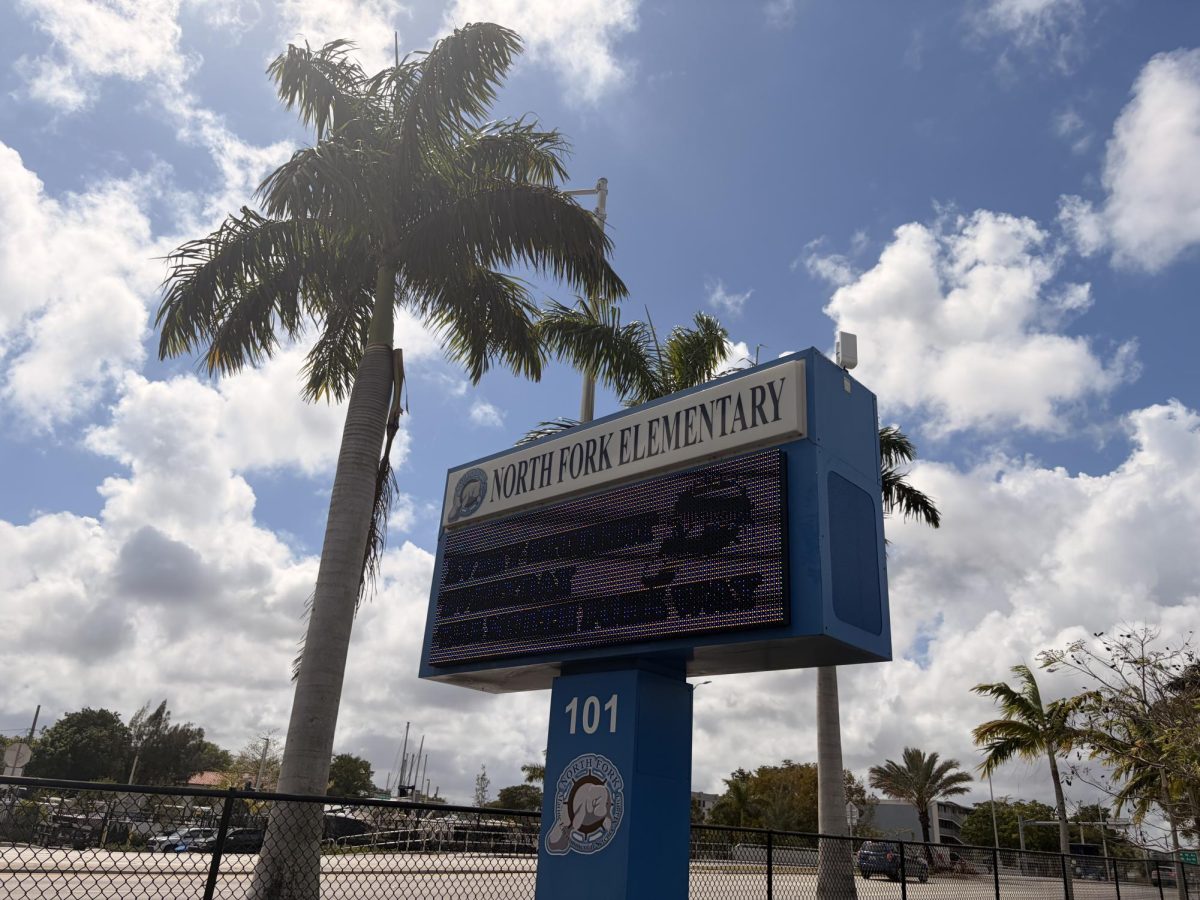
Education Students at Florida Atlantic University are concerned about the recent decision by the Broward County School Board to close the following public schools due to a decline in attendance and financial instability: Sunshine Elementary, Palm Cove Elementary, Panther Run Elementary, North Fork Elementary, Plantation Middle School, and Seagull Alternative High School.
The decision is a devastating blow for students who wished to work in the education field locally. The process is part of Broward County’s 2025-2026 ‘Redefining Our Schools’ initiative, and is estimated to save the district $8 million yearly.
Junior Lily Milano, an elementary education major who planned to stay in the area for work after graduation, shared her concerns about the job market following the closures.
“Our public schools are being left behind in favor of private charters, so the district is super strapped for cash,” said Milano. “I can only assume the job market is going to get worse, so I am definitely a little concerned.”
While she found the situation upsetting, Milano said she did not find it unexpected given the “current state” of Florida education.
“High-level administrators making 150k+ were given bonuses essentially by accident recently, and I think it shows that there’s action the district could be doing that it isn’t,” said Milano.
Milano still has high hopes for the future of Broward County education despite the shutdowns. “I think Broward County is really special, but the right people need to care,” she said.
With an estimated 1,000 staff cuts in the district through attrition and targeted layoffs, Nicole Hylton, an educator in Broward County for 29 years and currently working at Silver Lakes Middle, sees the shutdowns as a major concern for students at FAU who want to go into district administration or teaching.
“Even in administration. If they’re going to have a hiring freeze, why would they (students) get a degree in that?” said Hylton. “Also, teaching went from being something where you could always find a position or depend on to be there, to being something that’s not stable.”
Hylton described the educational field as a “battlefield in terms of accessibility” and emphasized the need for open positions for upcoming graduates. “We need great people in South Florida, but where are they going to work?”
On the other hand, Macie Barrett, an adjunct professor in the College of Education and a high school teacher, doesn’t see the closures as a threat to public education.
“It reflects how districts are reorganizing in response to demographic and structural changes,” said Barrett. “While uncertainty is real, it’s important to separate concerns about specific schools from the broader demand for skilled, well-prepared educators.”
Barrett also emphasizes the need for educators throughout South Florida, in counties other than Broward, and encourages students to branch out. “Graduates may find opportunities in neighboring districts, different school models, or roles they hadn’t initially considered,” said Barrett.
Similarly, Melanie Cormio, Director of Career Education and Coaching at the Career Center, remains optimistic about the opportunities for future educators.
“Students have opportunities not only in Broward, but also in Palm Beach, Martin, and Miami‑Dade counties,” said Cormio.
For any students in the education field who feel unsure about their future, Cormio encourages them to visit the Career Center. Additionally, on March 27, the Career Center and the College of Education will be hosting an event for upcoming graduates, which includes presentations from local districts and networking opportunities.
Isaiah Sewell is a Staff Writer for the University Press. For information regarding this or other stories, email [email protected] or contact him on Instagram @izayahx_