Florida Atlantic is among many universities struggling to keep some standout players in a college athletics world where money motivates players to leave one institution for another.
In recent months, running back Gemari Sands left for Florida State University per his announcement on Jan. 16. In 2024, Sands finished with 117 rushing yards and 2 rushing touchdowns on 3.8 yards per carry. The next season, Sands improved to 465 rushing yards and 217 receiving yards on 4.4 yards per carry.
Wide receiver Asaad Waseem, who played for Colorado for four games in two seasons and went to FAU, where he recorded 66 receptions, 699 receiving yards, on 58.3 receiving yards per game. This off-season, Waseem is heading to Purdue University, as announced on Jan. 6.
Respectively, comparing FAU with FSU and Purdue, both have larger athletic budgets and robust donor bases, providing better resources.
The UP reached out to the Florida Atlantic athletics department on this matter, but they declined to comment.
These departures highlight a glaring trend: smaller athletic programs struggle to keep top talent when resources are limited.
Players are seeking to transfer at an unprecedented rate. According to a study by Kent State University, there was a roughly 34% increase in transfer players from 2021 to 2022 and an 18% increase from 2022 to 2023. On Jan. 3, there were more Division I players in the transfer portal than there were players in the entire National Football League, which comprises more than 1,600 men.
According to Julian Valentin of Opendorse, NIL spending surged 824% from June 2024, following the House settlement rule that allows Division I schools to share revenue with student-athletes directly. Schools and collectives were front-loading deals ahead of the rule changes tied to the settlement.
Front-loading means structuring a player’s compensation so they receive a larger share upfront. According to Yahoo Sports writer Ross Dellenger on X, the basketball NIL payments surged five times more in March-April 2025 than in previous years.
Mid-majors generally have fewer national TV appearances and lower athletic revenue than Power 5 schools, which can limit the resources available to student-athletes, including NIL deals and revenue sharing.
“It comes down to survival,” said Wayne Black, an assistant professor of sports administration at the University of Cincinnati. “NIL is just the latest reason college athletic leaders must now think intentionally and innovatively about student retention if they want their institution to survive.”
Rylan Renteria, sports editor for the University of Texas at San Antonio student newspaper, The Paisano, said college sports have become more financially driven than opportunity-driven. “You can get drafted out of any school if you’re talented enough,” Renteria said. “I think it’s the possibility of getting drafted along with getting an $800,000 paycheck.”
When asked if there is a way to solve this problem, Renteria mentioned a salary cap. The NCAA doesn’t have a salary cap on NIL athletes. According to the UCLA Wire, UCLA basketball head coach Mick Cronin said there needs to be a salary cap. “It’s a shame we don’t have a salary cap, and everybody is playing even,” Cronin said, comparing college basketball to the MLB.
According to Sports Illustrated, NCAA sports are subject to a revenue-sharing cap of $21.3 million. While the NCAA cannot enforce an official salary cap, a revenue-sharing cap does limit what a school can distribute.
While transferring can offer more opportunities and better resources, there can be disadvantages to it.“When players transfer, they don’t play,” said Daniel Cornely, assistant director of FAU’s MBA in Sports Management Program. “Three million to go to a different school is life-changing money, but long-term, you have to look at the 30,000-foot view.”
In a way, for FAU athletics and other mid-majors to compete, they use the Competitive Excellence Fund and private donors, which allows universities to invest in student-athletes and their athletic programs.
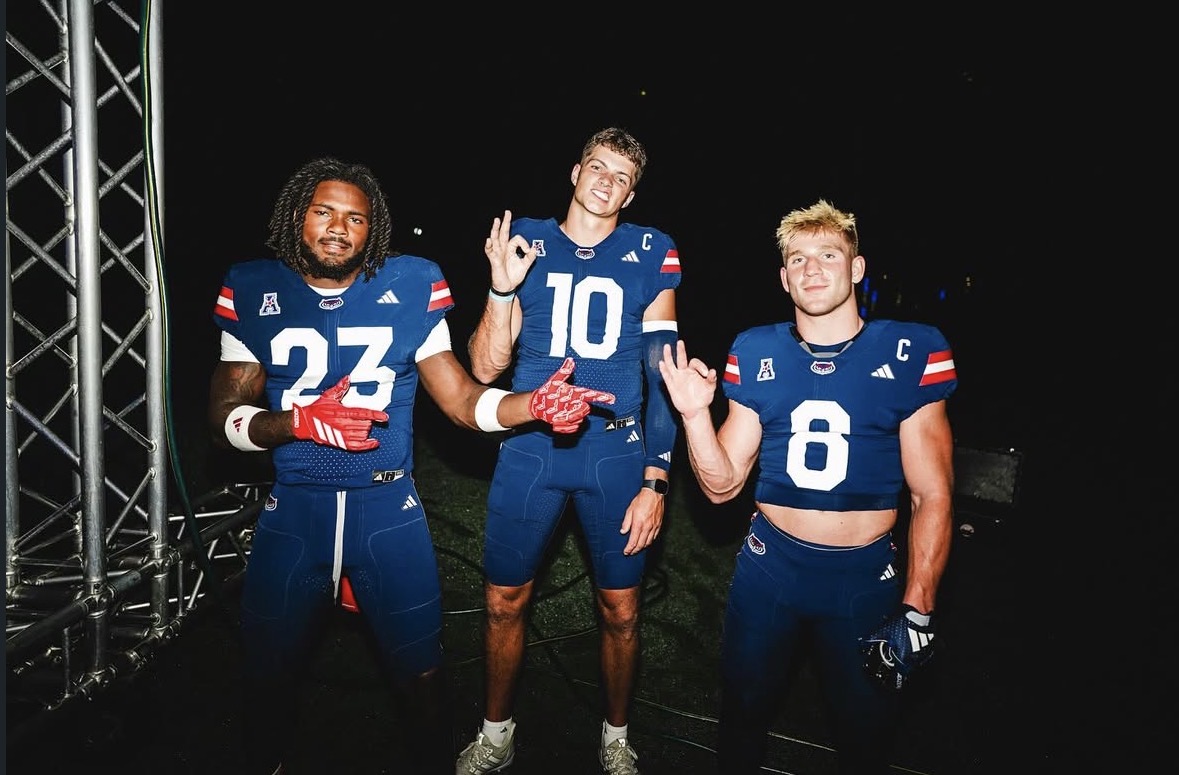
The Owls have managed to keep their entire coaching staff and standout players, including quarterback Caden Veltkamp, who played at Western Kentucky for three seasons, compiling 3,520 passing yards and 30 touchdowns. In his first season as an Owl, Veltkamp threw for 3,641 passing yards and 24 touchdowns.
Wide receiver Easton Messer is another key player the Owls will have in 2026. Messer also played at Western Kentucky for three seasons, tacking 1,321 receiving yards on 98 receptions with 9 touchdowns. With the Owls in 2025, Messer finished with 1,052 receiving yards on 104 receptions (led AC), with 6 receiving touchdowns.
However, according to 247Sports, FAU football just took in its second-most transfers in program history, with 29 outgoing and 30 incoming.
Angeline Close Scheinbaum, a sports marketing professor at Clemson University, believes it has become the norm for student-athletes to transfer because of an NCAA rule adopted in 2024. Student-athletes don’t have to sit out a year if they transfer or apply to the NCAA for a waiver to compete immediately.
“Athletes can now have eligibility to compete right away with the new rule,” Schienbaum said. “Before, they needed a waiver per the NCAA.”
Sam Ehrlich, assistant professor of legal studies in business at Boise State University, thinks it’s time for programs like Florida Atlantic to accept the reality of the situation. Ehrlich wrote on Feb. 6 that while there is always a risk of losing top performers, mid-majors can succeed if they can consistently identify the right fits, develop them, and maintain a stable core.
“Boise State finds players who really fit the culture and shape and develop them in a way where they want to stick around rather than leave for ‘greener’ pastures,” said Ehrlich, who also says that mid-majors do have to accept the reality of being a developmental program that sometimes has to lose key players to higher-level programs.
Even though NIL benefits larger athletic programs, it can also help mid-majors and create opportunities for them, said OKSR economist Andy Schwarz. He co-founded the Professional Collegiate League, which sought to pay players directly rather than having teams work around it through NIL, revenue sharing, and corporate sponsorships. It failed to launch in 2022, but Schwarz still believes there is value in this idea.
“The poor school can focus its spending on retaining that one player, make it worth his while to stay, in a way not possible without NIL,” he said.
Anthony Ortiz is the Reporter for the University Press. For more information regarding this or other stories, email Ortiz at [email protected].