Tri-Rail, a commuter train linking students from Miami Dade, Broward, and Palm Beach counties to the FAU Boca Raton and Fort Lauderdale campuses, faces a potential service shutdown due to recent funding deficits, posing a threat to commuting students’ day-to-day routines.
With its around-the-clock service and connecting station-to-campus shuttle, Palm Tran, which runs every 20 minutes with cost-free 10-minute rides directly from the Boca Raton station to the FAU campus, the Tri-Rail train has served as an effective and efficient means of transportation to students since 1989.
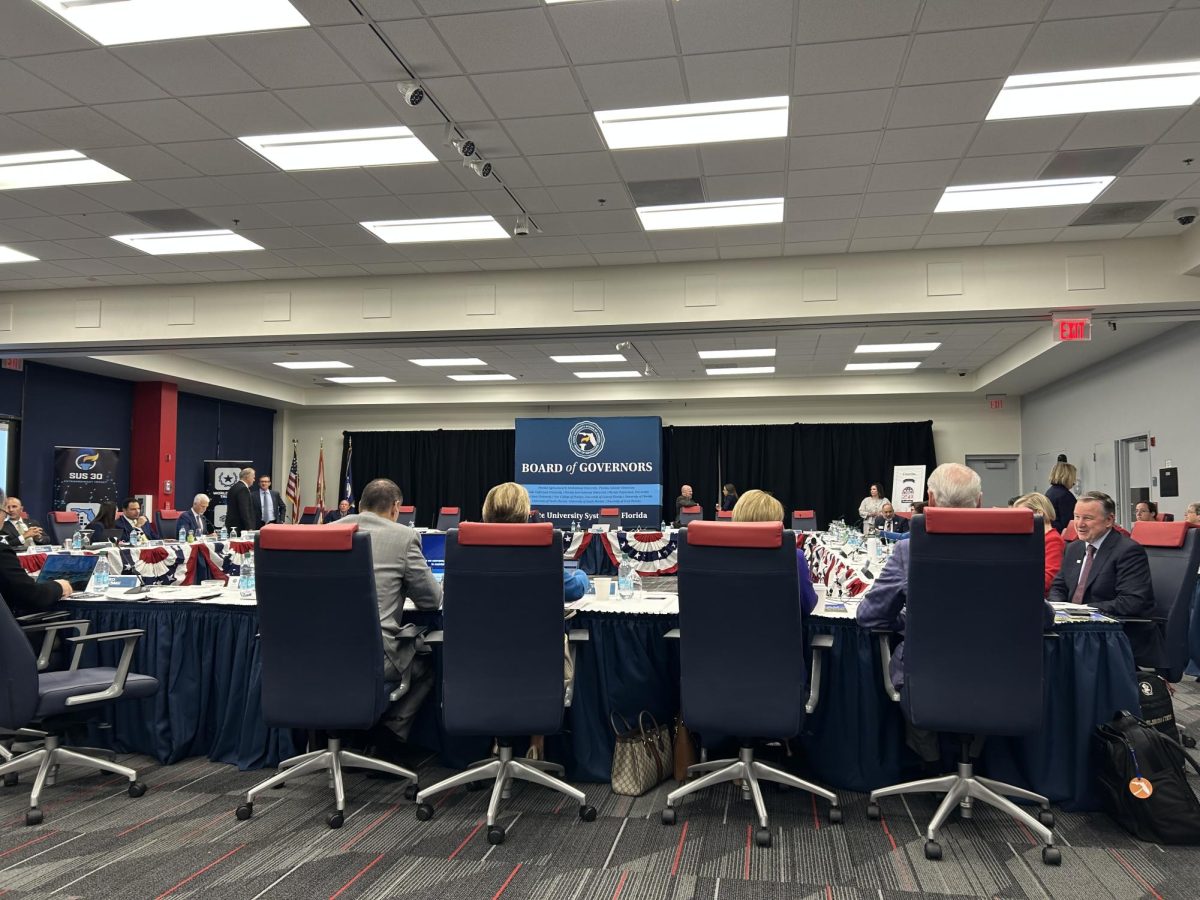
The Florida Department of Transportation (FDOT) introduced a new budget cut strategy in July 2025, which ultimately led to the redefinition of the minimum funding requirement. Funds for servicing decreased by $27 million, as the train’s budget went from $42.1 million to $15 million.
The University Press reached out to members of the South Florida Regional Transportation Authority governing board for a comment, but did not receive a response in time for publication.”
As reported by Tri-Rail’s executive director, David Dech, to the Palm Beach Post, the last train could run in July 2027 if Tri-Rail finds no other sources of funding.
“I have to commute from West Palm Beach, I don’t have a personal car, so it comes in handy,” said FAU student Ariana Ncelhaney, who expressed personal experiences and concerns upon hearing of the shutdown, right as she was waiting for the connecting FAU shuttle, Palm Tran, to take her from the station to campus. “If it were to end, it would make it more of a headache, and I feel like a lot of people would agree,” she stated.
For students living off campus, the train has been crucial for continuing their education at FAU’s campuses. One student, Lucas Del Valle, stated, “My dad lives over in Fort Lauderdale, so it’s useful for me when I’m down there; it’s been pretty important for me getting to school because normally I don’t have any other form of transportation when I’m there.”
In a domino effect on Tri-Rail’s advantages, an end to servicing would also end rides to connecting airports such as Miami International Airport, Fort Lauderdale-Hollywood International Airport, and Palm Beach International Airport, causing students to turn to potentially more difficult or costly transportation services to get them to and from airport terminals.
According to FAU Boca Campus Treasurer Nicholas Silano, who has also benefited from Tri-Rail’s convenience, the train’s advantages have extended beyond simply getting students from point A to point B. “Tri-Rail is also cheap, clean, and students depend on it for rides to the airport,” said Silano. “If they cut the funding, which they already said they would, it would be devastating for students.”
“I think our school could do better on public transportation,” said Silano. He, along with Student Government House of Representatives Jack Nixon, mentioned working on a new airport transportation program through SG. Like Tri-Rail, the program would offer students rides to nearby airports such as Fort Lauderdale-Hollywood International.
“This project is only being worked on by house treasurer Nick and [me],” stated Nixon. However, even with all its similarities, the new alternative may still not offer everything Tri-Rail has provided students over the years.
As stressed by Silano, “This program will be cheaper, more convenient, but you wouldn’t be able to use it at night, whereas with Tri-Rail you would.”
Alternative forms of transportation consequently keep more students off the roads. Eric Dumbaugh, a professor in the Department of Urban and Regional Planning at FAU, stressed the importance of keeping transportation that prioritizes safety up and running at the university.
Dumbaugh’s work focuses on transportation planning and road design to prevent people from being killed or injured on roads.
“We’ve got a large number of students and faculty that use it,” said Dumbaugh. “Tri-Rail is probably one of the safest ways to get to campus; if we were to lose it, it may be detrimental not only to the commuting aspects but the safety ones.”
Melissa Manzi is a Contributing Writer for the University Press. Email her at [email protected] for more information on this and other stories.